
 By Wild Rise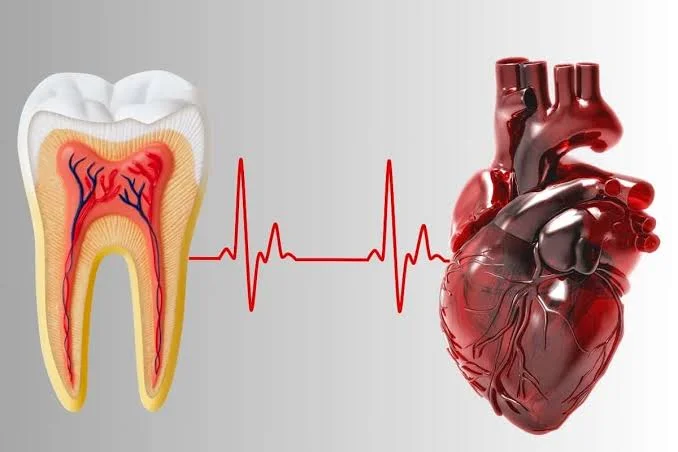
In December 2025, the American Heart Association published a formal scientific statement on something dentists have suspected for years: that inflamed gums and heart disease are connected in ways serious enough to change how both conditions get discussed in a check-up. It wasn’t a fringe claim buried in a journal nobody reads. It was the AHA, one of the most conservative, evidence-driven bodies in cardiology, telling patients with heart disease that their dentist should be part of the conversation.
Anyone booking with a dentist leamington spa that residents trust for routine care is now more likely to hear about this directly, rather than gum health being treated as a separate topic from everything else going on in their body.
What the Research Actually Shows
The clearest large-scale evidence comes from a Dutch study reviewing over 60,000 dental patients aged 35 and older. Researchers found that people with periodontitis, the more advanced stage of gum disease, were substantially more likely to have a history of cardiovascular problems including heart attack, stroke, and severe chest pain, even after accounting for other known risk factors like smoking, high blood pressure, and diabetes. The association held at roughly 59% higher likelihood once those other factors were controlled for.
That’s an association, not proof that one causes the other, and it’s worth being precise about that distinction. The AHA’s own statement makes a similarly careful point: while the link between gum disease and cardiovascular problems is well established, there currently isn’t strong evidence that treating gum disease directly reduces a person’s risk of a heart attack or stroke. The relationship is real. Whether fixing one side fixes the other is still being studied.
The Mechanism Behind the Link
What explains the connection, as far as researchers currently understand it, comes down to inflammation and bacteria travelling further than the mouth. Periodontitis involves a persistent bacterial infection beneath the gumline. Bacteria and the toxins they produce can enter the bloodstream through inflamed gum tissue, and once there, they appear to interact with the lining of blood vessels, the endothelium, in ways that contribute to the build-up of arterial plaque. That same bacterial presence also triggers wider inflammatory responses in the body, and chronic inflammation is already a well-established contributor to atherosclerosis independent of oral health.
In short: an infection that starts in the gums doesn’t necessarily stay contained there, and the body’s response to it may ripple outward in ways that affect the cardiovascular system specifically.
How This Is Changing What Happens at a Check-Up
The practical shift is fairly direct. Where a routine appointment with a dentist in leamington that patients see for gum health used to focus almost entirely on the mouth in isolation, it’s increasingly common for a dentist to ask about cardiovascular history as part of assessing periodontal risk, and for gum disease to be flagged more seriously as a factor worth discussing with a GP or cardiologist rather than treated purely as a dental matter.
The AHA’s statement specifically recommends that people with existing cardiovascular disease be offered a dental risk assessment and referral, which reflects a two-way shift, cardiology recognising oral health as relevant to heart risk, and dentistry recognising a duty to flag periodontal disease as more than a localised problem.
What This Means If You Have Gum Disease, or a Family History of Heart Disease
None of this is a reason for alarm over a single instance of bleeding gums. But persistent gum inflammation, gums that bleed regularly when brushing, gums that have visibly receded, or a diagnosis of periodontitis specifically, is worth treating as more than a cosmetic or localised issue, particularly for anyone who already has cardiovascular risk factors like high blood pressure, high cholesterol, or a family history of heart disease.
Where This Comes Up at Andrew Lee Dental Practice
Timothy Rhodes, one of the practice’s dental therapists, works specifically on periodontal disease treatment, root surface debridement and ongoing management of exactly the kind of gum disease this research is concerned with. Increasingly, that work involves a conversation about a patient’s broader health history rather than treating a periodontal pocket in isolation, which reflects the same shift described in the AHA’s guidance: gum health assessed as part of a wider picture, not a separate compartment of care.
What to Ask at Your Next Check-Up
Worth raising directly if you have any cardiovascular risk factors: whether your gum health has been assessed beyond a surface-level check, whether any periodontal pockets have been measured and tracked over time, and whether that information would be worth mentioning to your GP given the two conditions’ documented association.
Summary
The evidence connecting gum disease and heart disease has moved from an interesting correlation to something a major cardiology body now formally acknowledges, even while acknowledging the limits of what’s proven. Persistent gum inflammation appears to be more than a dental-only concern, and that’s changing how a thorough check-up with a Dentist in Warwick that residents visit for periodontal care actually approaches the conversation, less isolated to the mouth, more connected to everything else the research now says it might be linked to.